The All-Hands Playbook: How Interactive Walls Turn Town Halls Into Two-Way Conversations
Traditional all-hands meetings follow a predictable pattern: leadership talks, employees listen, maybe a few brave souls ask questions at the end, and everyone leaves feeling like it was a broadcast, not a conversation. Interactive walls change this dynamic by turning passive town halls into genuine two-way dialogues.
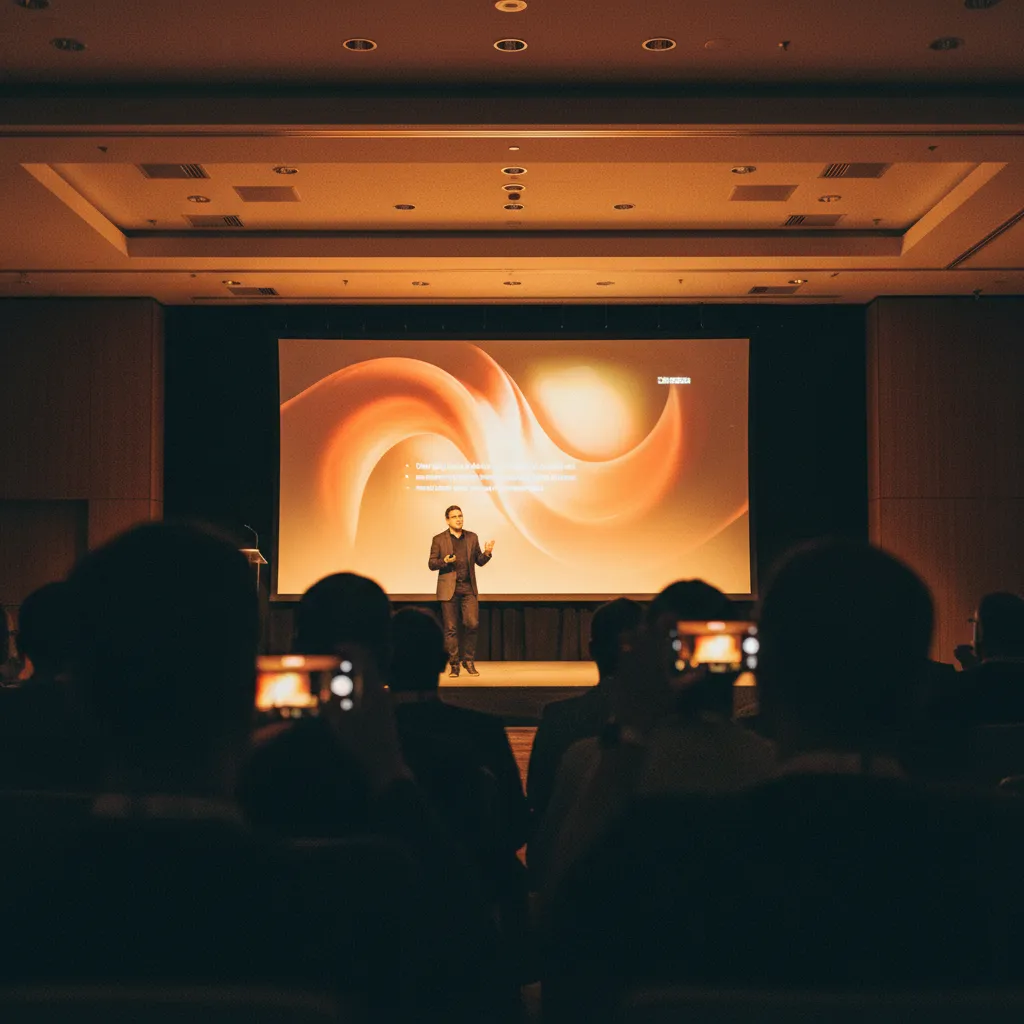
The attention cliff: what dies after slide 8
It happens at every company all-hands. Your CEO is 15 minutes into quarterly updates when you notice the telltale signs: laptops opening, phones emerging, eyes glazing over. By the time you reach the mandatory "culture and values" section around slide 8, you've lost half the room.
The problem isn't your content or your speakers. The problem is the format itself. Expecting employees to sit through 60 minutes of passive listening feels as outdated as reading company memos aloud. Your team is used to Slack threads, Instagram Stories, and TikTok comments — they expect to participate, not just observe.
The cost of disengagement is real: missed strategic context, questions left unasked, disconnect from leadership vision, and employees who see all-hands as "time to catch up on email."
The solution: turn broadcasting into dialogue
Interactive walls solve the engagement problem by meeting employees where they already are — on their phones — and channeling that attention into productive participation. Instead of fighting device distractions, you harness them.
How it works: the 3-second participation loop
- Display a QR code on every slide throughout the all-hands
- Employees scan with their phone camera (no app required)
- They submit questions, shout-outs, or reactions
- Messages appear on the main screen in real-time
- Leadership addresses top questions as they emerge
Starter prompts that drive participation
The secret to high engagement isn't just having an interactive wall — it's asking the right questions at the right moments. Here are proven prompts for each section of your all-hands:
Opening (first 5 minutes)
- "Share a win from the past month" — gets people in a positive mindset
- "One word to describe your week" — easy entry point, shows collective mood
- "Shout out someone who helped you recently" — builds culture, increases belonging
Strategic updates (middle section)
- "Questions for leadership on [this quarter's priorities]" — collects real concerns
- "What would help you execute on this strategy?" — surfaces blockers
- "React with 👍 if this aligns with your team's work" — real-time pulse check
Q&A segment (final 15 minutes)
- "Submit your question for the leadership panel" — no raised hands, no anxiety
- "👍 questions you also want answered" — surfaces what matters most
- "Follow-up questions on [topic just discussed]" — keeps conversation flowing
Moderation & safety nets
Open submission can feel risky. What if someone posts something inappropriate? What if trolls hijack the wall? Here's how to moderate effectively without killing spontaneity:
Three-layer moderation strategy
Layer 1: AI pre-filtering (Professional tier)
Automatically categorizes submissions by professionalism level. Only allows content rated 1-2 (professional, appropriate) to appear on the wall. Happens instantly, invisible to users.
Layer 2: Manual review toggle
For extra sensitive all-hands, enable "approve before display" mode. A moderator quickly approves or rejects submissions from a simple dashboard.
Layer 3: Screen freeze button
Presenter can instantly freeze the wall display with one click if anything slips through. Submissions continue in the background but don't appear on screen until unfrozen.
Pro tip: In practice, inappropriate submissions are rare when people use work accounts and see their name attached. The bigger risk is under-participation, not trolls.
Metrics that matter: measuring real engagement
Unlike "number of attendees" (which tells you nothing about engagement), interactive walls give you actionable data:
| Metric | Typical range | What it tells you |
|---|---|---|
| Participation rate (% of attendees who submitted at least one message or reaction) | 35-65% | Typical range for well-prompted all-hands |
| Questions surfaced (total unique questions submitted) | 20-40 | Compare to 3-5 in traditional raised-hand Q&A |
| Questions answered (% of submitted questions addressed by leadership) | 60-80% | Shows how well you close feedback loops |
| Topics surfaced (recurring themes in questions and comments) | 5-8 | Guides follow-up actions and next all-hands topics |
Post-event: close the loop
The all-hands doesn't end when people leave the call. Use your collected submissions to maintain momentum:
48-hour follow-up sequence
- Day 1: Export all submissions. Tag recurring themes. Group unanswered questions by department.
- Day 2: Post a #all-hands-recap in Slack with the top 3 themes from questions (shows you listened), answers to top unanswered questions, action items based on feedback, and the shout-outs that were shared.
- Week 2: Share a Notion doc or wiki page with all Q&A organized by topic — this becomes your living FAQ.
Interactive wall vs. survey link vs. hashtag wall
How does an interactive wall compare to other engagement tools you might already use?
| Feature | Interactive wall | Survey link | Hashtag wall |
|---|---|---|---|
| Participation speed | 3 seconds (scan QR) | 60+ seconds (open link, load form) | 30 seconds (open Twitter, find hashtag) |
| Real-time display | ✓ Instant | ✗ Results later | ✓ With delay |
| Privacy control | ✓ Internal only | ✓ Internal only | ✗ Public social media |
| Photo sharing | ✓ Built-in | ~ With file upload | ✓ Native |
| Anonymous questions | ✓ Optional | ✓ Optional | ✗ Public account visible |
| Moderation control | ✓ AI + manual | ~ After submission | ✗ Platform-dependent |
Frequently asked questions
How do you prevent inappropriate submissions during all-hands meetings?
Use a three-layer approach: AI pre-filtering (Professional tier automatically blocks inappropriate content), optional manual review before display, and a screen freeze button for presenters. In practice, when employees see their name attached to submissions, inappropriate content is rare.
What's a good participation rate for town hall meetings?
For well-prompted all-hands meetings using interactive walls, aim for 35-65% participation (employees who submit at least one message or reaction). This is significantly higher than traditional raised-hand Q&A, which typically sees 2-5% participation.
Can you use interactive walls for hybrid all-hands meetings?
Yes, interactive walls work especially well for hybrid events. Remote participants submit via the same QR code as in-person attendees, and all messages appear on the same display. This creates one unified experience instead of separate in-person and virtual Q&A channels.
How long does it take to set up an interactive wall for an all-hands?
Setup takes about 60 seconds: create your event, display the QR code on your first slide, and share the display link with your presentation team. No app downloads, no IT approval, no complicated integrations required.
What should you do with all-hands questions that don't get answered live?
Export all submissions after the meeting, group unanswered questions by theme and department, then post a 48-hour follow-up in Slack with answers to top questions, action items, and a link to a living FAQ doc. This shows employees their feedback was heard and creates accountability.
How many questions should you expect from a 200-person all-hands?
With an interactive wall, expect 20-40 unique questions from a 200-person all-hands (10-20% submission rate). This compares to 3-5 questions in traditional raised-hand formats. The key is prompting questions throughout the meeting, not just during a final Q&A segment.
Ready to Transform Your Events?
Create engaging, interactive experiences that your attendees will remember. Join thousands of event organizers using QR Wall for conferences, corporate events, and more.
Get Started Free